3D printable engine models that really move
Short answer
Shapekit has free STL files for six working engine models and two engine-shaped desk fans. Four move when you turn a crank or push them: a V8, a 7-cylinder radial, a Wankel and a steam locomotive. Two run by themselves: the Stirling engine on a cup of hot coffee and the Tesla turbine on compressed air. The engines print in PLA without supports and come with a parts list and building steps.
- Models
- 6 engines, 2 fans
- Fewest parts
- Wankel, 16
- Most parts
- V8, 146
- Runs by itself
- Stirling, Tesla turbine
- Price
- Free, no account
Side by side
| Model | How it moves | Printed parts | Filament | What you buy | Largest part needs |
|---|---|---|---|---|---|
| V8 engine | Hand crank: pistons, camshaft and 16 valves in firing order | 146 | ≈ 0.8 kg | 16 small springs, 42 M3 screws | 220 mm |
| Radial engine | Hand crank: 7 pistons on a master rod, propeller | 52 | ≈ 1.0 kg | 31 M3 screws, 27 nuts | 242 mm |
| Wankel rotary engine | Handle: triangular rotor in a trochoid housing | 16 | ≈ 0.4 kg | 11 M3 screws, 9 nuts | 190 mm |
| Stirling engine | Runs by itself on the warmth of a hot drink | 19 | ≈ 0.2 kg | 2 aluminium discs, 2 bearings, a balloon, 3 mm rod | 118 mm |
| Tesla turbine | Runs by itself on compressed air | 17 | ≈ 0.2 kg | M8 bolt, 2 skate bearings, 6 M3 screws | 108 mm |
| Steam locomotive | Push it: pistons and Walschaerts valve gear move | 75 | ≈ 0.8 kg | Filament pins and glue only | 194 mm tall, 225 mm diagonal |
| Turbo desk fan | A real fan, 12 V motor | 4 | ≈ 0.9 kg | 775 motor, coupling, power supply | 256 mm tall |
| Jet engine desk fan | A real fan, 12 V motor | 7 | ≈ 0.8 kg | 775 motor, coupling, power supply | 250 mm |
Filament is for PLA with 15% infill and 3 walls. Screw counts are from each model's parts list.
Which one to print first
- A first build: the Wankel. 16 parts, 11 screws, and the open front shows the rotor and its gears at work.
- The most to look at: the V8. A cross-plane crankshaft, a gear-driven camshaft, pushrods, rockers and sixteen valves opening in the 1-8-4-3-6-5-7-2 order.
- The biggest on the shelf: the radial engine, 37 cm tall with its propeller.
- One that runs without you: the Stirling engine on a mug of hot water, or the Tesla turbine if you have a compressor.
- No screws at all: the steam locomotive, which is pinned with pieces of filament.
-
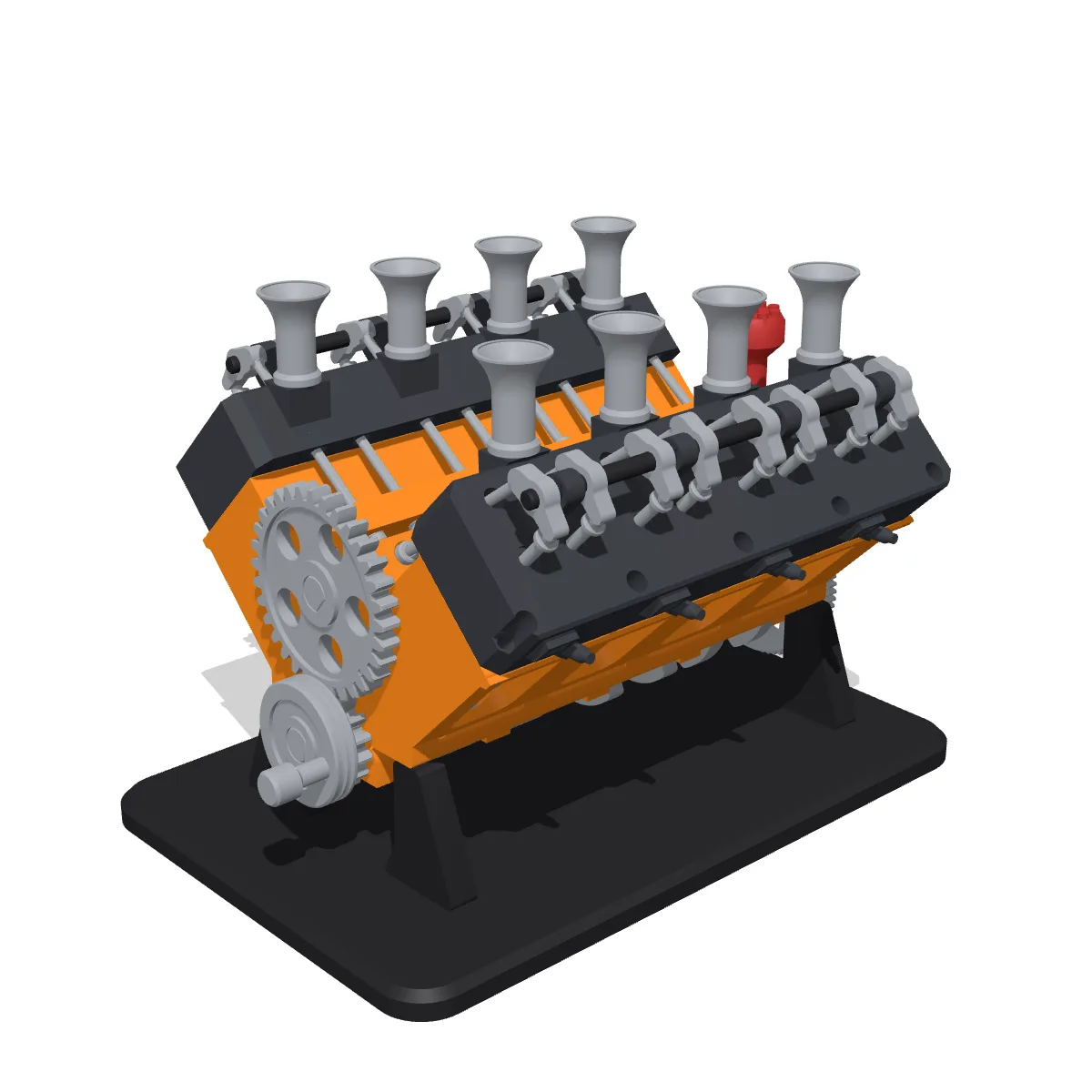
V8 engine
Turn the handle: pistons, camshaft and valves move in order.
-
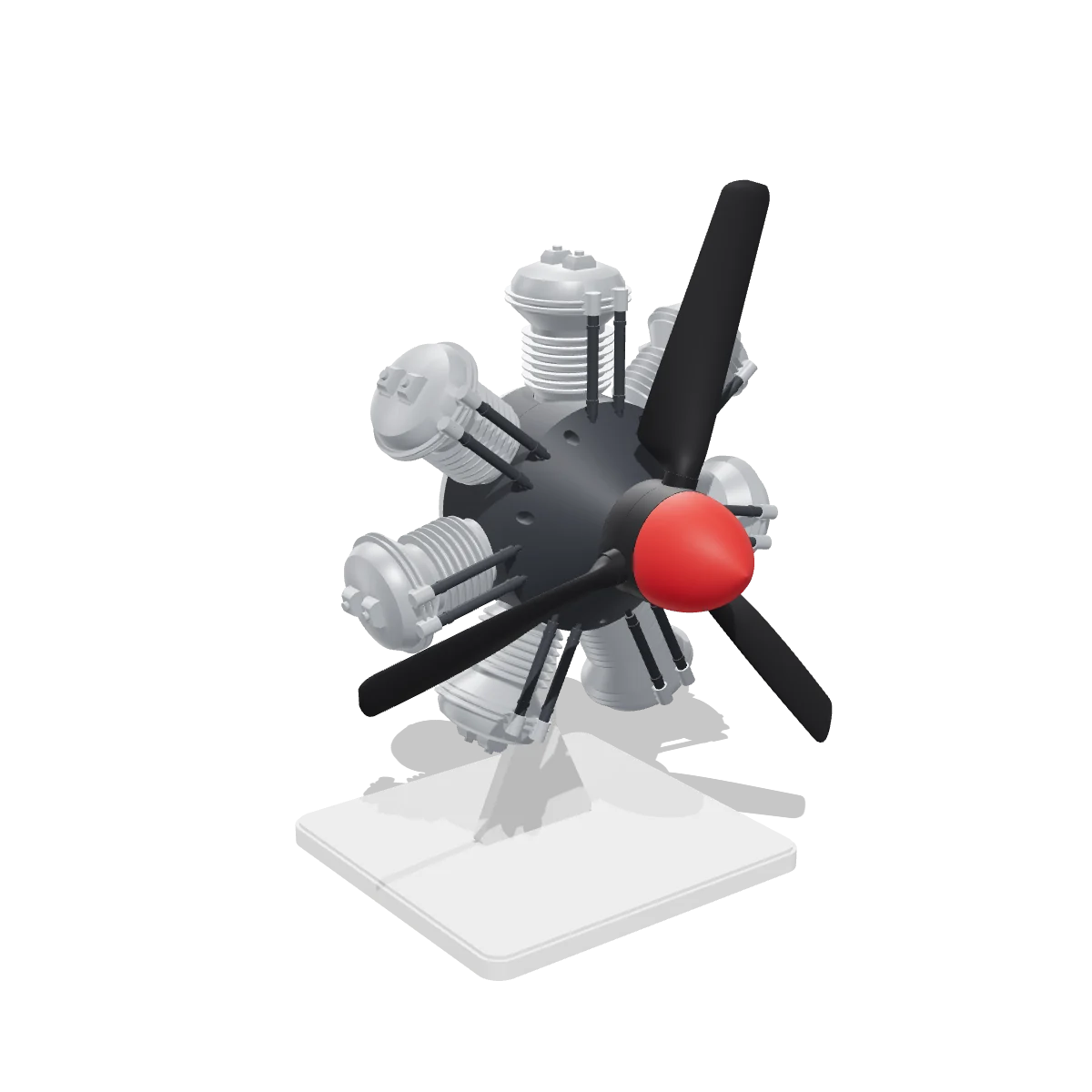
Radial engine
Seven cylinders round a master rod and a propeller.
-
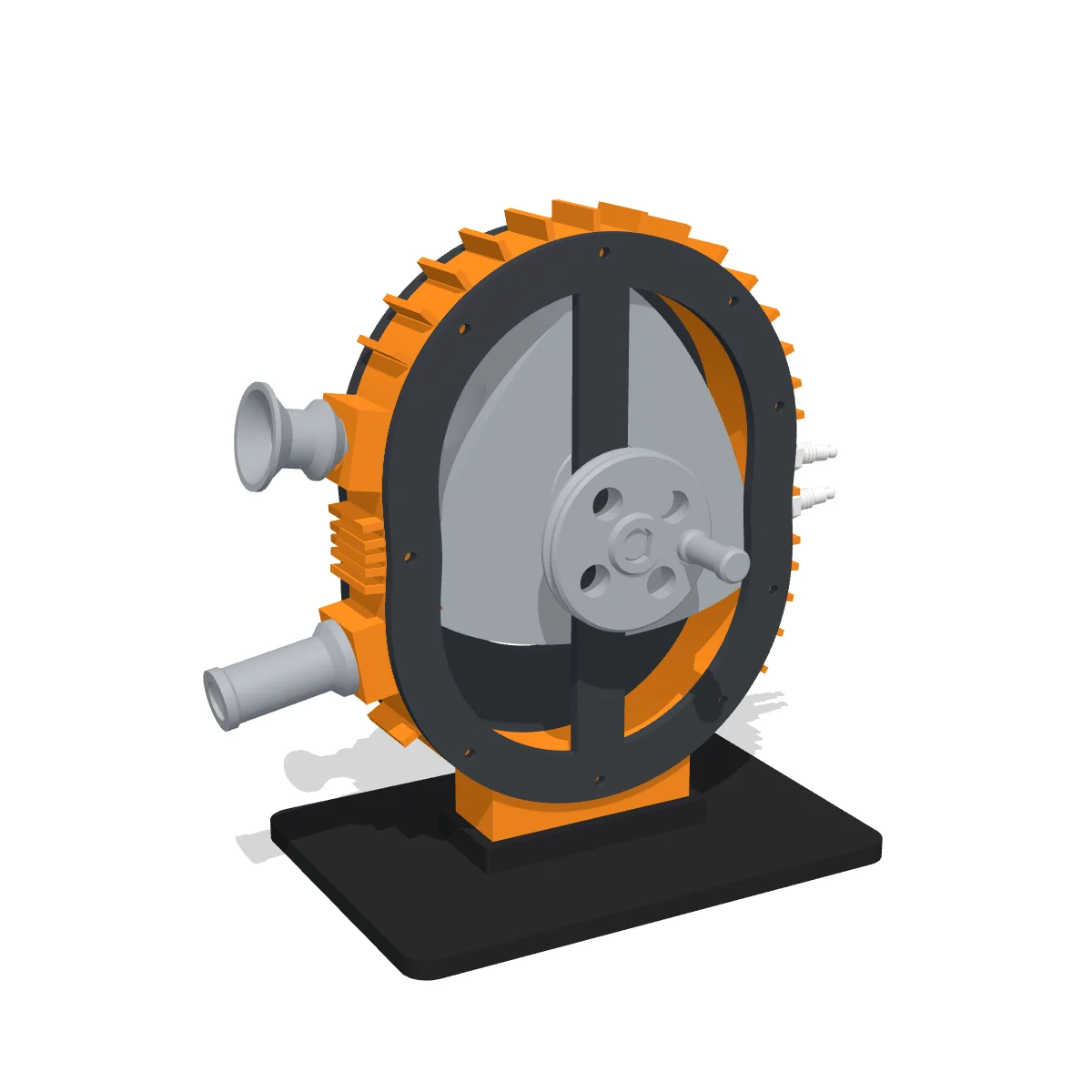
Wankel engine
A three-sided rotor on an eccentric shaft.
-
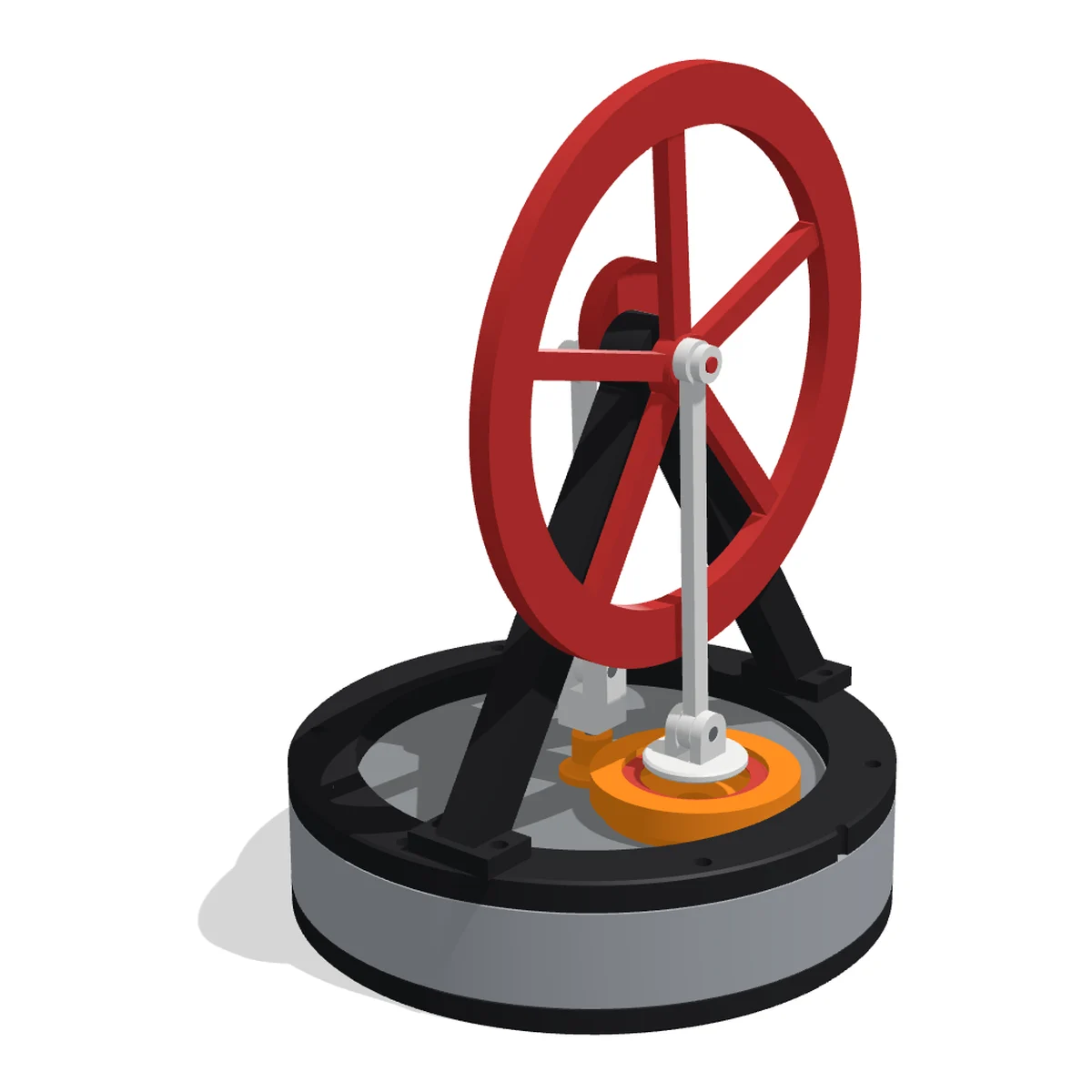
Stirling engine
Put it on a hot drink and the flywheel starts to turn.
Also in the drivetrain
To go with the engines: a five-speed manual gearbox with reverse and an H-pattern lever (49 parts, no screws), and a cutaway car differential where holding one wheel makes the other turn twice as fast (27 parts).
Good to know
Do these engines really run?
The Stirling engine and the Tesla turbine run on their own: one on the temperature difference between a hot drink and the air, the other on compressed air. The V8, radial and Wankel are models that move when you turn them by hand, like a cutaway engine in a classroom; they don't burn fuel.
Do I need supports?
No. All of them print without supports. The fans' housings are the exception: they print upside down with supports.
What printer do I need?
Any FDM printer with a 0.4 mm nozzle. The table shows the bed size the largest part needs; a 256 mm bed (Bambu Lab A1, P1S, X1) fits all of them.
Can I add a motor?
The fans come with a motor mount. The crank-driven engines are made to be turned by hand.
Are they free?
Yes, without an account. Free for personal use under CC BY-NC 4.0: print, remix and share with credit, but don't sell the files or the prints.