Free 3D model

Print-in-Place Geneva Drive

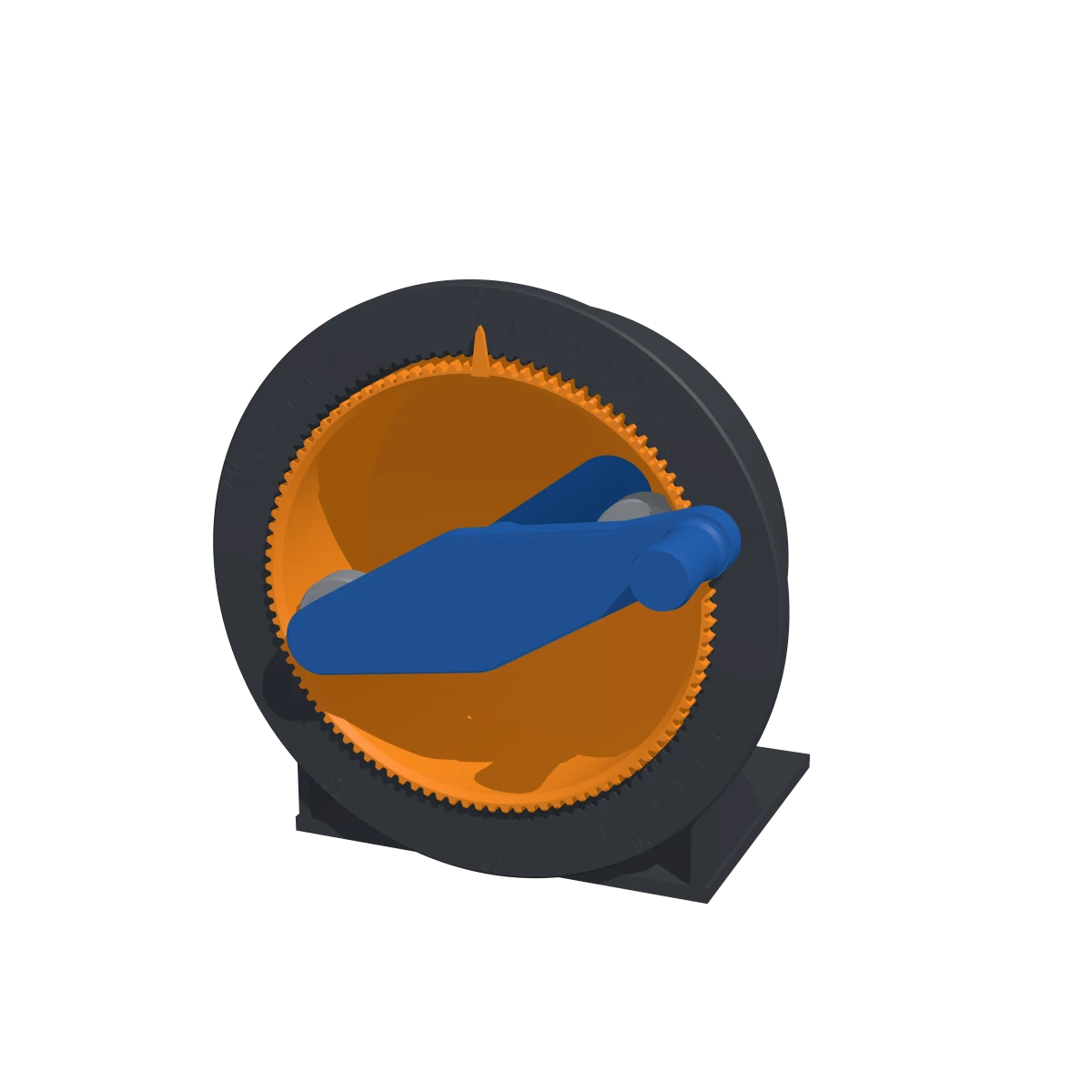
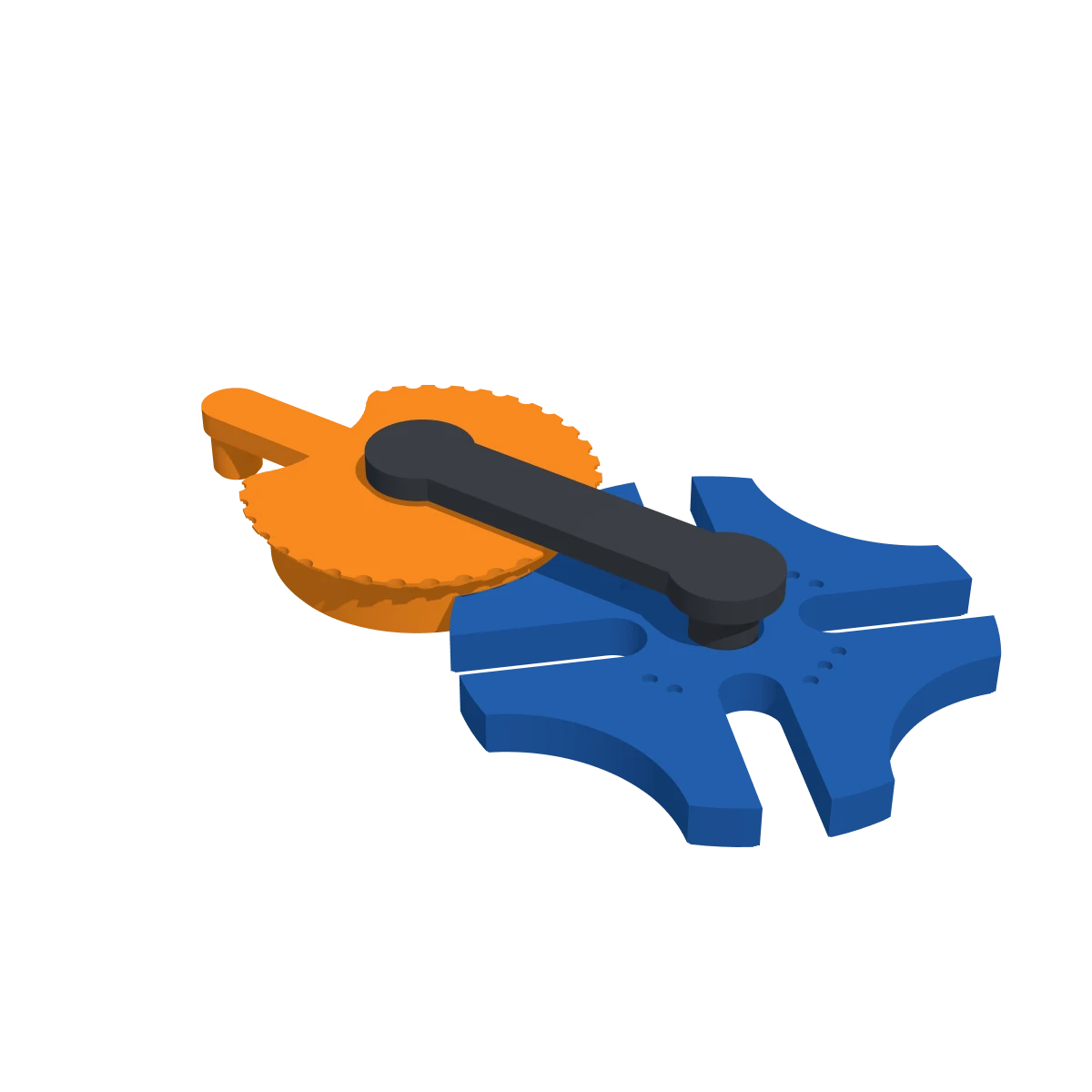
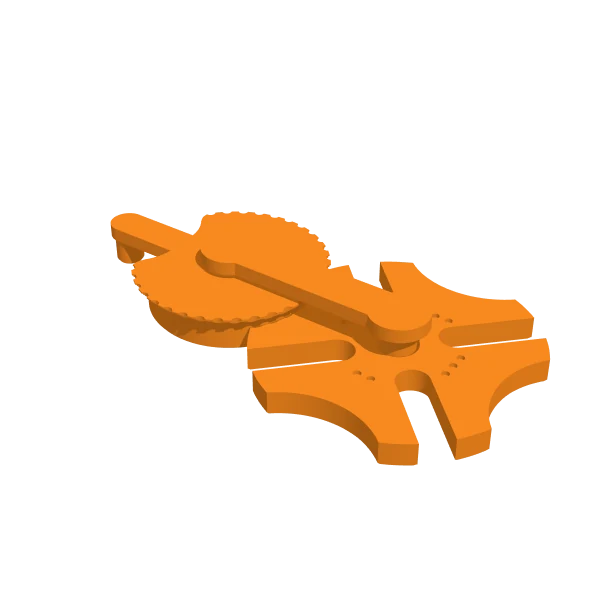
The mechanism that moved film through old cinema projectors, as a pocket fidget. Turn the orange knob and nothing happens to the star for three quarters of a turn. Then the pin drops into a slot, the star snaps round 90° and the round locking disc holds it still again. Four turns bring the star round once; the dots on the star count the steps. Frame, knob and star print together in one file, about 7 g of PLA.

  • 3parts, printed in one go
  • 7 × 4 × 1 cmassembled (L × W × H)
  • ≈ 7 gfilament in total
  • 70 × 40 mmbed size; 8.8 mm tall
Download all files ZIP · 1.1 MB

Free for personal use under CC BY-NC 4.0: print it, remix it and share it with credit to Shapekit. Please don't sell the files or the prints.

Take it apart in 3D · Parts · How to build it

In 3D

Turn it, take it apart

Every part as you print it. Pick colours to see what your filament will look like.

The 3D model (2.2 MB) loads when you get here.

Preview colours

Knob
Star
Frame

Drag to rotate · scroll or pinch to zoom

In the download

1 parts, ready to print

Every STL is already placed the right way up. Download them all at once, or one by one.

Geneva drive

The frame, the knob and the star in their places, in one file: 66 × 36 mm and 8.8 mm high. Knob and star each turn on a post of the frame with 0.4 mm of play; a 45° cone at the foot of each post keeps them on. The 3MF has the three parts as separate objects, to give each its own colour.

Size
66 × 36 × 9 mm
Print
Flat, as it lies, no supports, no brim, 0.2 mm layers. The bar on top is a short bridge from post to post.
Filament
≈ 7 g
STL 2.2 MB: Geneva drive
Also needed

Parts you buy

  • Nothing else: no screws, no glue, no supports.
Print settings

Slicer settings

0.20 mmlayer height (the gaps above the star and the knob are three layers)
3walls
15%infill
PLAmaterial

For a 0.4 mm nozzle. Filament amounts are estimates for these settings.

Assembly

How to build it

Print it

Flat on the bed, no supports, no brim. A clean first layer matters: if it is squashed, the knob and the star can stick together at the bottom. Let it cool on the bed.

Free it

Hold the bar between thumb and finger and turn the knob slowly, back and forth at first and then all the way round. If the star sticks to its post, turn it by hand once.

Play with it

Turn the knob by its fluted rim. Every full turn moves the star one slot; count the dots.

Small parts: not for children under 3.

Good to know

What is a Geneva drive?

A mechanism that turns a steady rotation into steps. A pin on the driving wheel enters a slot of the star for a quarter of each turn and pushes it round 90°. For the rest of the turn a round locking disc sits in a hollow of the star, so it cannot move. Film projectors used it to move the film one frame at a time, and old watches used it to stop the mainspring from being wound too far.

Does it really come off the printer working?

Yes. The knob and the star lie on the bed 0.4 mm apart, each round a post of the frame. The bar that joins the posts is printed 0.6 mm above the knob, and the pin's arm 0.6 mm above the star, so nothing is joined.

Why does the star not fall off when I pick it up?

Each post has a 45° cone foot, and the hole in the knob and in the star follows that cone. The part can drop 0.6 mm, then it rests on the cone.

How long does it take to print?

It is about 7 g of PLA and 8.8 mm high. With 0.2 mm layers that is roughly 30 to 40 minutes on a Bambu Lab A1 or P1S; this is an estimate, not a timed print.

Has it been printed?

Not yet. The gaps, every printed layer and a full turn of the mechanism are checked by a program, but no test print has been made. If you print it, we would love to see a photo.